

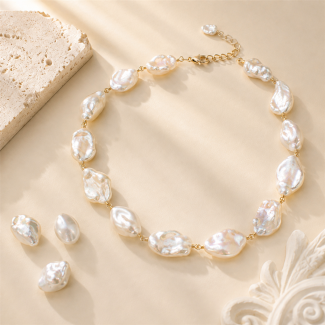
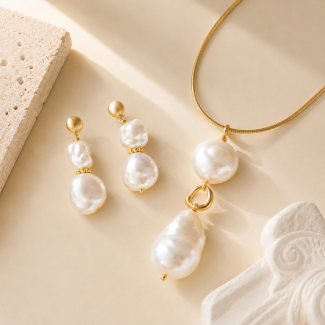
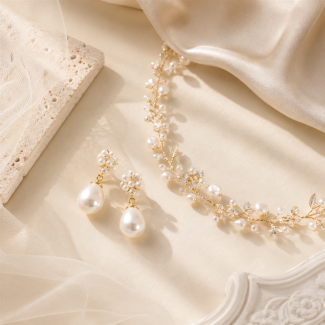
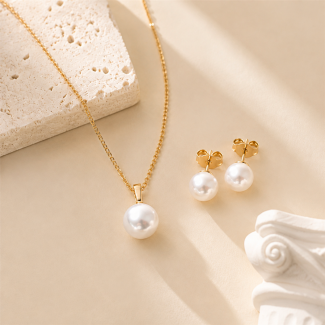
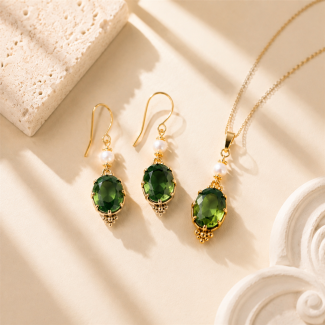
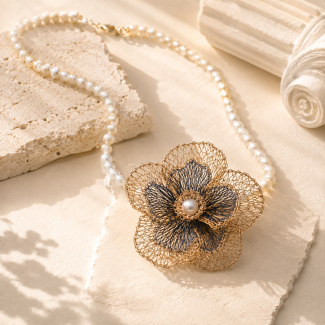
Pearl size changes the visual weight of jewelry more than many people expect. A difference of just one or two millimetres can make an earring look quieter, a necklace feel more classic, or a single pearl become a clear focal point.
Pearls are usually measured in millimetres. The right size is not determined by age or a fixed style rule; it depends on pearl type, shape, setting, placement and the effect you want.
How are pearls measured?
A round pearl is measured across its diameter. A non-round pearl usually needs at least two measurements—length and width—and a highly dimensional baroque pearl may also be described by depth.
- Round: one diameter, such as 8 mm.
- Oval or drop: length × width, such as 10 × 8 mm.
- Baroque: length × width, sometimes with a third depth measurement.
Measurements refer to the pearl itself, not the full size of an earring, pendant or setting. Always check the product description before comparing two finished pieces.
Why one millimetre can be noticeable
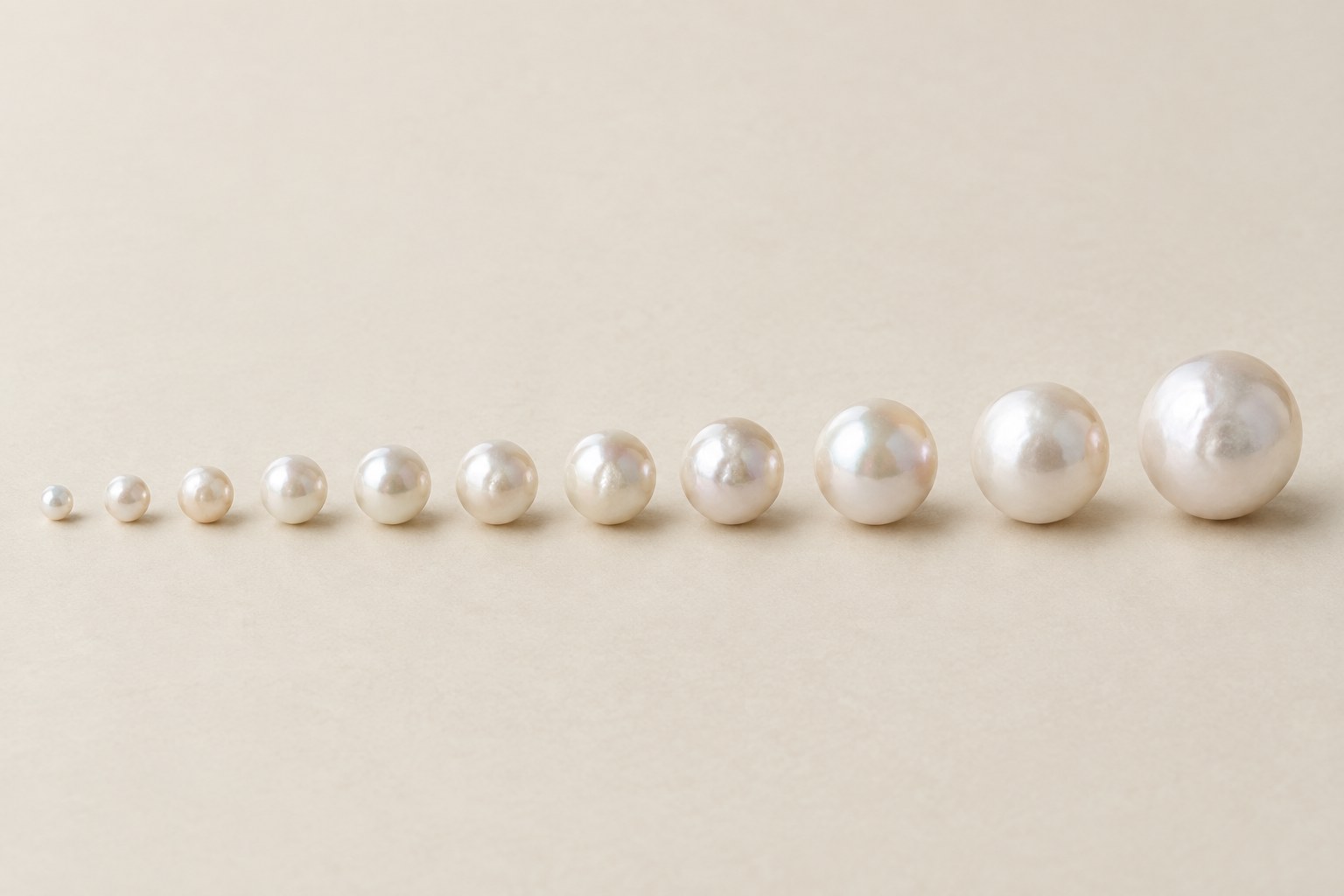
Size increases in every direction. An 8 mm round pearl is not simply one millimetre taller than a 7 mm pearl; it also has more width and volume. That is why neighbouring sizes can look meaningfully different when placed side by side.
The effect is strongest in pairs, strands and repeated designs. A small increase across every pearl in a necklace changes the total visual weight considerably.
A practical visual size guide
These ranges describe general visual impressions rather than fixed grading categories. Pearl types and individual designs may fall outside them.
2–4 mm: tiny and delicate
Very small pearls create a fine texture rather than a dominant focal point. They work well as accents, seed-like details and closely spaced elements in intricate designs.
5–6 mm: subtle and light
This range tends to feel quiet and easy to layer. In earrings, it creates a restrained point of light. In necklaces and bracelets, repeated pearls remain visible without feeling visually heavy.
7–8 mm: balanced and versatile
Many people experience this range as clearly recognisable pearl jewelry without a strong statement scale. It can work for studs, small pendants and classic strands.
9–10 mm: noticeable
Pearls in this range have greater presence, especially near the face. A simple setting can feel polished and substantial without becoming oversized.
11–12 mm: statement scale
At this size, the pearl usually becomes the visual centre of the design. Shape, surface and lustre are easier to see, which can make a beautiful baroque outline especially expressive.
13 mm and above: bold and sculptural
Large pearls create a strong focal point. The effect varies widely by pearl type and shape: a 14 mm button pearl may sit lower than a 14 mm round pearl, while an elongated baroque pearl may look larger because of its length.
Typical size differs by pearl type
Do not compare millimetres without considering the pearl family. Akoya cultured pearls are usually found in more compact ranges. Tahitian and South Sea cultured pearls are commonly larger. Freshwater cultured pearls span a broad spectrum, from tiny forms to modern bead-nucleated pearls over 10 mm.
GIA notes that pearl types have characteristic ranges but can occur outside them. A size that is ordinary for one type may be relatively uncommon for another.
For environmental and cultivation differences, see our freshwater and saltwater pearl comparison.
How pearl size changes earrings
In stud earrings, size affects how much of the earlobe the pearl visually covers. A smaller pearl reads as a delicate highlight; a larger one becomes the main feature.
For drop earrings, overall length and movement may matter more than diameter alone. A 9 × 7 mm drop can look more elongated than a 9 mm round pearl even when both share one measurement.
Also consider the setting. A halo, metal frame or cluster of gemstones can make the finished earring appear much larger than the pearl measurement suggests.
How pearl size changes necklaces
In a uniform strand, every millimetre affects the rhythm and total scale. Smaller pearls create a lighter line around the neck, while larger pearls create more continuous visual volume.
A graduated strand uses smaller pearls toward the clasp and larger ones near the centre. In this design, the centre measurement alone does not describe the whole necklace; the full range should be listed.
For a single-pearl pendant, chain length and the size of the setting change the balance. A modest pearl can feel prominent on a fine chain, while a larger pearl may need a stronger chain and bail.
How pearl size changes bracelets and rings
Bracelets are seen at close range and move against surfaces, so size affects both appearance and practicality. Larger pearls may receive more contact during daily wear.
Pearl rings have the same concern. A large pearl rises higher from the hand and is more exposed to knocks. Choose the scale with the setting and your routine in mind, then remove the ring for chores and exercise.
Shape changes apparent size
Two pearls with the same widest measurement can look very different. A button pearl is broad but flatter. A drop or oval draws the eye vertically. A baroque pearl may have ridges and projections that create more visual presence than a smooth round pearl.
This is why measurements should be read alongside photographs and shape terminology. Our guide to different pearl shapes explains those outlines in detail.
Does a larger pearl mean better quality?
No. Size is one value factor, not a quality grade. Larger pearls are generally rarer when all other factors are comparable, but a large pearl can still have weak lustre, serious surface damage or poor nacre quality.
Compare size together with shape, colour, lustre, surface, nacre quality and matching. In finished jewelry, construction and craftsmanship also matter.
How to choose the right pearl size
- Check the measurement format. Is it a diameter, or length × width?
- Look for scale. A photograph on the ear, neck or hand is more useful than an isolated macro image.
- Consider the full design. Include metal frames, gemstone clusters and chain thickness.
- Think about movement and contact. Large earrings may feel heavier; large rings and bracelets receive more knocks.
- Choose the effect you enjoy. Delicate, balanced and bold are style choices—not age categories.
If possible, compare a ruler or familiar object to the listed millimetres. Product photos can be enlarged or cropped, so measurements provide the more reliable scale.
For more help understanding pearl types and character, explore our complete Pearl Guide.
Frequently asked questions
Is 6 mm a small pearl?
It usually creates a subtle, light effect, but appearance depends on the setting and where it is worn. A 6 mm stud may be understated, while a cluster of 6 mm pearls can feel more prominent.
What is a classic pearl earring size?
There is no single standard. Around 7–8 mm often gives a balanced, recognisable look, but smaller and larger sizes can be equally appropriate.
Are bigger pearls always more expensive?
Size can increase value when type and quality are comparable. Lustre, surface, shape, colour, nacre quality, matching and rarity still affect price.
How are baroque pearls measured?
Usually by length and width, with depth added when needed. Because their outlines are irregular, photographs from several angles help explain the measurements.